
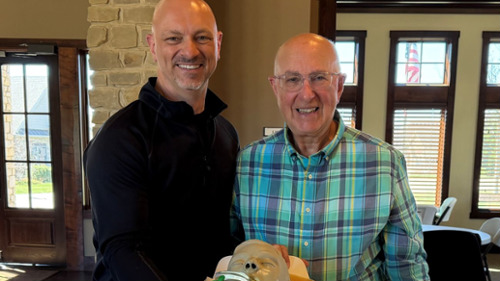
As a dentist providing parenteral moderate sedation, maintaining the highest level of patient safety is not just a goal; it is a responsibility. Recently, I completed the Essentials of the Airway course through Sedation Consult, a Missouri Dental Board–approved program designed specifically for sedation providers. This course fulfills the state’s airway management requirement and reinforces the standard of safe sedation, beginning and ending with airway management.
Sedation dentistry allows us to deliver comfortable, anxiety-free care, but it also introduces real physiological risk, especially as it relates to respiration. When a patient is sedated, their ability to maintain their own airway can become compromised. It’s essential to understand how to recognize and respond to these signs and symptoms.
Courses like this emphasize that airway management is not just about reacting to emergencies, but it’s also about preventing them. Sedation providers must be able to identify risk factors, monitor patients appropriately, and intervene early when subtle changes occur. Airway knowledge is truly a cornerstone of safe sedation practice.
Learning from an Experienced Educator
A standout aspect of this course is the leadership behind it. Allan Schwartz, the owner of Sedation Consult, brings decades of experience in both dentistry and anesthesia. He is a graduate of Texas A&M University College of Dentistry (1980) and later completed his anesthesia training at Washington University School of Nurse Anesthesia in 1994.
With over 13 years of experience teaching anesthesia to dentists, hygienists, assistants, physicians, nurses, and CRNAs, his depth of knowledge is immediately evident. In addition to his role with Sedation Consult, he serves as a Clinical Assistant Professor in the Department of Periodontics at Saint Louis University Center for Advanced Dental Education. Learning from someone with this level of expertise adds tremendous value and credibility to the course.
Chesterfield Dentist: A Hands-On Approach to Real-World Scenarios
One of the most valuable aspects of this training was its combination of didactic learning and hands-on experience. We reviewed essential techniques, such as proper patient positioning, the use of airway adjuncts, and bag-valve-mask ventilation, as well as more advanced interventions, such as laryngeal mask airways and endotracheal intubation.
The course also focused on recognizing and managing emergency scenarios, including airway obstruction, laryngospasm, and respiratory depression. Practicing these situations in a controlled environment builds both confidence and competence, skills that are critical when seconds matter.
What This Means for Our Patients
Ultimately, continuing education like this directly benefits our patients. It ensures that every sedation procedure is approached with the latest knowledge, refined skills, and heightened safety awareness.
Patients place a great deal of trust in their dental provider, especially when sedation is involved. By investing in continuing education for advanced airway training and learning from experienced educators like Allan Schwartz, we are reaffirming our commitment to delivering safe, high-quality care.
Sedation dentistry is an incredible tool for improving patient comfort and access to care. However, it must always be paired with preparation, vigilance, and ongoing education. This course was an important reminder that excellence in patient care starts with mastering the fundamentals, especially the airway.